
If your dog chews everything in sight, you’re not alone. Many dogs go through phases where they chew furniture, shoes, or other household items. While this behavior can be frustrating, it’s usually caused by natural instincts or unmet needs. Understanding why your dog chews everything is the first step to fixing the problem.
Disclosure: DogGizmo may earn a commission when you buy through links on this page. This does not affect which products we recommend.
Part of the indoor enrichment and behavior hub. Related next: stop chewing furniture and toys for destructive behavior.
How to get better results with dogs chewing everything
Chewing can come from teething, boredom, anxiety, habit, or lack of better options. The right fix depends on when and why the chewing happens.
Owners dealing with shoes, furniture, and household chewing
Age, timing, triggers, exercise, and access to safe chew items
Only saying no without giving a better outlet
DogGizmo tip: Interrupt calmly, redirect to the right chew, then reward your dog for using it.
Why Dogs Chew Everything
Chewing is a natural behavior for dogs. It helps relieve stress, keeps their teeth healthy, and provides mental stimulation. However, when dogs chew excessively, it’s often a sign that something is missing in their daily routine.
Common Reasons Dogs Chew Everything
1. Boredom
Dogs that don’t get enough mental or physical stimulation often turn to chewing as a way to entertain themselves. When a dog has nothing to do, they will look for their own activities, which often leads to chewing furniture, shoes, or other household items.
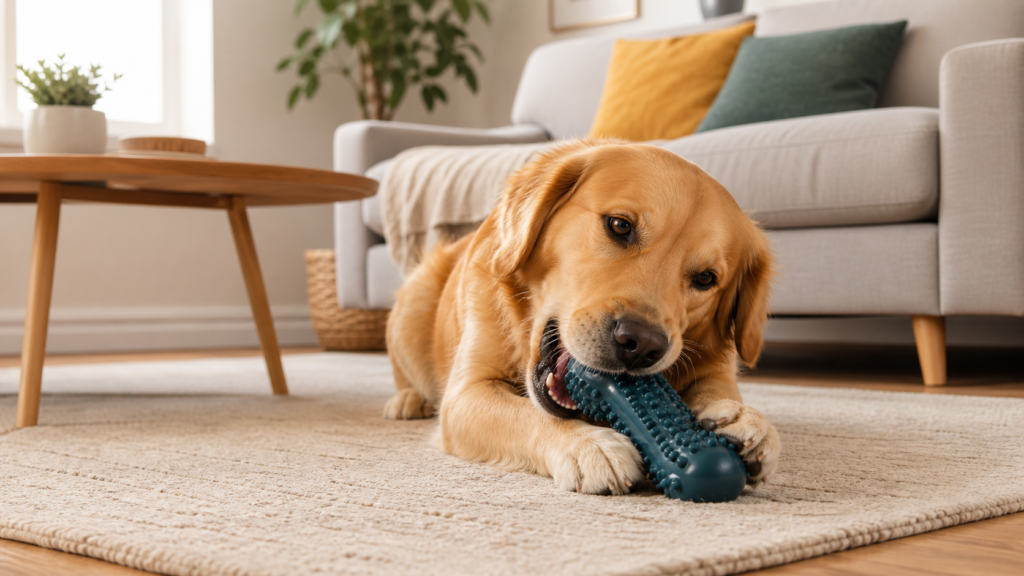
In many cases, giving your dog something more engaging to focus on, such as a durable chew toy or an interactive toy, can help redirect this behavior. These types of toys provide a safe outlet for chewing while also keeping your dog mentally occupied.
If your dog gets bored easily, you can read our guide on how to keep a dog busy indoors for more ideas.
2. Teething (for puppies)
Puppies chew a lot when they are teething because it helps relieve discomfort in their gums. This behavior is normal but should be managed with appropriate chew toys.
3. Excess Energy
Dogs with too much energy may chew as a way to release it. Without enough exercise or activity, they look for other ways to burn energy.
4. Anxiety or Stress
Some dogs chew as a way to cope with stress or anxiety. This can happen when they are left alone or in unfamiliar situations.
How to Stop a Dog from Chewing Everything
1. Provide Proper Chew Toys
Giving your dog appropriate chew toys can redirect their behavior away from household items. Durable toys designed for chewing are the best option to satisfy this natural instinct.
2. Increase Mental Stimulation
Providing activities that challenge your dog’s brain can reduce boredom and the urge to chew everything. Mental stimulation is just as important as physical exercise.
You can also check out our guide to the best dog toys for mental stimulation to help keep your dog engaged.
3. Keep Items Out of Reach
Managing your dog’s environment can help prevent bad habits from forming. Keeping shoes and other items out of reach reduces opportunities for destructive chewing.
You can also read our guide to the best dog toys for mental stimulation to help reduce destructive behavior.
When Chewing Becomes a Problem
Chewing is normal for dogs, but it becomes a problem when it is excessive or destructive. If your dog constantly damages furniture or household items, it may be a sign of boredom, stress, or lack of proper outlets. Addressing the cause is key to stopping this behavior.
Final Thoughts
If your dog chews everything, it’s usually a sign of boredom, excess energy, or natural behavior. By understanding the cause and providing the right outlets, you can significantly reduce unwanted chewing and create a more balanced roue. Creating a balanced routine with enough activity and stimulation is the key to preventing long-term behavior issues.
Check out our guide on how to keep a dog busy indoors.
You can also read our guide to the best dog toys to stop destructive behavior.
Frequently Asked Questions
What should I try first for
Start with the simplest change: adjust your dog's routine, remove the most obvious trigger, and reward calm behavior. If the problem continues, add training steps gradually.
Can toys or gadgets help with this behavior?
They can help when the behavior is linked to boredom, stress, or too much unused energy. They work best alongside training, exercise, sleep, and a predictable daily routine.
When should I ask a vet or trainer?
If the behavior is sudden, intense, linked to pain, or getting worse, contact a vet or qualified trainer. Medical issues and anxiety can look like normal behavior problems.