
Looking for the best dog toys? Start with your dog’s real need: boredom, chewing, puppy teething, small-dog sizing, strong jaws, anxiety, or mental stimulation. This DogGizmo pillar guide gives you the main decision path first, then links to the deeper buying guides for each type of dog and play style.
Best dog toys: quick answer
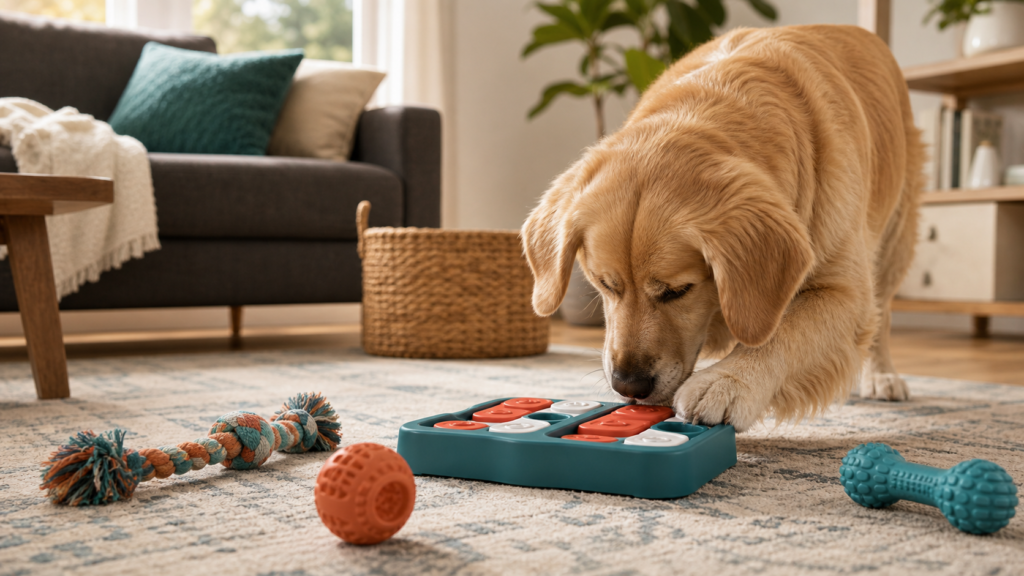
The best dog toy for most dogs is a small rotation of three types: one safe chew toy, one enrichment or puzzle toy, and one interactive play toy. That combination covers chewing, boredom, and bonding without filling your home with random toys your dog ignores.
| Dog need | Best toy type | Deeper guide |
|---|---|---|
| Boredom or restlessness | Puzzle toys, snuffle mats, food toys | best dog toys for bored dogs |
| Strong chewing | Durable rubber toys and heavy-duty chews | best dog toys for aggressive chewers |
| Puppy teething | Soft puppy-safe chew toys | best dog toys for puppies |
| Small mouth or gentle play | Lightweight small-dog toys | best dog toys for small dogs |
| Home-alone stress | Calm enrichment and slow-feeder toys | dog toys for dogs home alone |
| Mental stimulation | Puzzle toys and treat-dispensing toys | best dog toys for mental stimulation |
Dog toy categories
Dog toys work best when each toy has a job. Use the categories below to choose the right starting point, then follow the internal links to compare more specific options.
Mental stimulation dog toys
Best for clever, restless, or food-motivated dogs that need a task.
best dog toys for mental stimulation | are puzzle toys good for dogs | how to use puzzle toys for dogs
Boredom and home-alone toys
Best for dogs that pace, bark, chew, or get restless when the house is quiet.
best dog toys for bored dogs | dog toys for dogs home alone | dog toys for separation anxiety
Durable chew toys
Best for strong jaws, destructive chewing, and dogs that tear soft toys apart.
best dog toys for aggressive chewers | dog toys that actually last | dog toys to stop destructive behavior
Dog toys by size and age
Best when safety depends on your dog’s age, mouth size, and play strength.
best dog toys for puppies | best dog toys for small dogs | best dog toys for large dogs
Choose dog toys by problem
For boredom and indoor energy
If your dog seems restless, starts demanding attention, or gets into trouble indoors, begin with best dog toys for bored dogs. For a full daily routine, add how to keep a dog busy indoors and how to tire out a dog without walking. If you are still unsure what is driving the behavior, read why your dog is always bored.
For chewing and destructive behavior
For strong chewers, start with best dog toys for aggressive chewers or dog toys that actually last. If chewing also happens around furniture, shoes, or household items, use why dogs chew everything and how to stop a dog from chewing furniture so you address the cause instead of only replacing toys.
For separation anxiety and home-alone time
For dogs that struggle when left alone, choose calm enrichment rather than high-arousal toys. Start with dog toys for separation anxiety, then compare dog toys for dogs home alone and keep a dog busy when you are not home for a more complete home-alone setup.
Choose dog toys by dog type
Best toys for puppies
Puppies usually need softer textures, beginner puzzle toys, and safe teething options. Use best dog toys for puppies first, then read why dogs chew everything if chewing feels constant.
Best toys for small dogs
Small dogs need toys that fit smaller mouths without being too heavy or frustrating. Start with best dog toys for small dogs, especially if standard toys feel oversized.
Best toys for large dogs
Large dogs often need tougher materials and safer sizing. Compare best dog toys for large dogs, then use best dog toys for aggressive chewers if your dog is also a powerful chewer.
Best toys for active dogs
Active dogs may need movement-based play as well as enrichment. If your dog loves fetch, compare automatic dog ball launchers, but keep high-energy toys balanced with calming puzzle or sniffing work.
Dog toy safety checklist
- Choose a toy size your dog cannot swallow.
- Supervise the first few sessions with any new toy.
- Remove toys with loose pieces, sharp edges, or ripped seams.
- Avoid very hard toys if your dog has sensitive teeth.
- Use food toys as part of your dog’s daily food amount, not always as extra calories.
Best starting point: if you only read one buying guide next, use best dog toys for mental stimulation. It connects naturally to puzzle toys, boredom, indoor enrichment, and several problem-specific guides.
Best dog toys FAQ
What type of toy is best for most dogs?
Most dogs benefit from one chew toy, one enrichment toy, and one interactive toy. This gives your dog variety without relying on a pile of toys that all do the same thing.
Are puzzle toys good for dogs?
Yes, puzzle toys can be very helpful for bored or food-motivated dogs. Start with an easy puzzle and increase difficulty slowly. Read how to use puzzle toys for dogs for the correct way to introduce them.
How many toys should a dog have?
A small toy rotation usually works better than giving your dog every toy at once. Rotate a few toys every couple of days and remove anything damaged.
What is the safest dog toy for aggressive chewers?
There is no single safest toy for every aggressive chewer, but durable rubber toys are often a better starting point than plush toys. Use best dog toys for aggressive chewers and supervise any new toy until you know how your dog handles it.