
The best dog camera for separation anxiety is not the camera with the most flashy features. It is the one that helps you understand what your dog does when you leave, spot stress signals early, and support calm training without making your dog more excited. For many owners, a camera with clear video, useful alerts, two-way audio control, and optional treat rewards is the safest starting point.
Disclosure: DogGizmo may earn a commission when you buy through links on this page. This does not affect which products we recommend.
Related guides: dog cameras with treat dispensers, dog cameras for home monitoring, stop barking when left alone, and toys for separation anxiety.
Quick answer: best camera features for anxious dogs
If your dog struggles when left alone, choose a camera that helps you observe calmly first. Treat tossing and audio can help some dogs, but they can also make some dogs more excited.
| Pick | Best for | Check first |
|---|---|---|
| Treat dispenser camera Best choice | Rewarding calm moments during alone-time practice | Treat size, jam rate, app reliability, alert control |
| Simple monitoring camera Budget pick | Watching patterns without adding too much interaction | Video quality, night vision, privacy, storage |
| Two-way audio camera | Dogs that settle when they hear your voice | Audio delay, speaker quality, whether your dog gets excited |
| Motion alert camera | Spotting pacing, door-watching, or restlessness | Notification control, false alerts, subscription costs |
| Night vision camera | Evening routines, darker rooms, and crate areas | Low-light clarity, camera angle, power cable safety |
Can a dog camera help with separation anxiety?
A dog camera can help you understand separation anxiety, but it will not fix it by itself. The main value is observation: you can see when your dog starts barking, pacing, scratching, chewing, drooling, or settling. That information makes it easier to adjust your training, routine, and enrichment.
A treat dispenser can be useful if your dog is calm enough to eat and respond. If your dog panics, ignores food, or becomes frantic when the camera activates, use the camera for monitoring first and keep training sessions shorter.
Watch patterns, reward calm moments, and learn what happens after you leave.
Two-way audio and treat tossing can help some dogs but overexcite others.
Serious separation anxiety needs gradual training, routine changes, and sometimes professional help.
Best dog cameras for separation anxiety in 2026
These are the camera types I would compare first if your main concern is stress when your dog is home alone.
1. Treat dispenser dog camera
Best choice
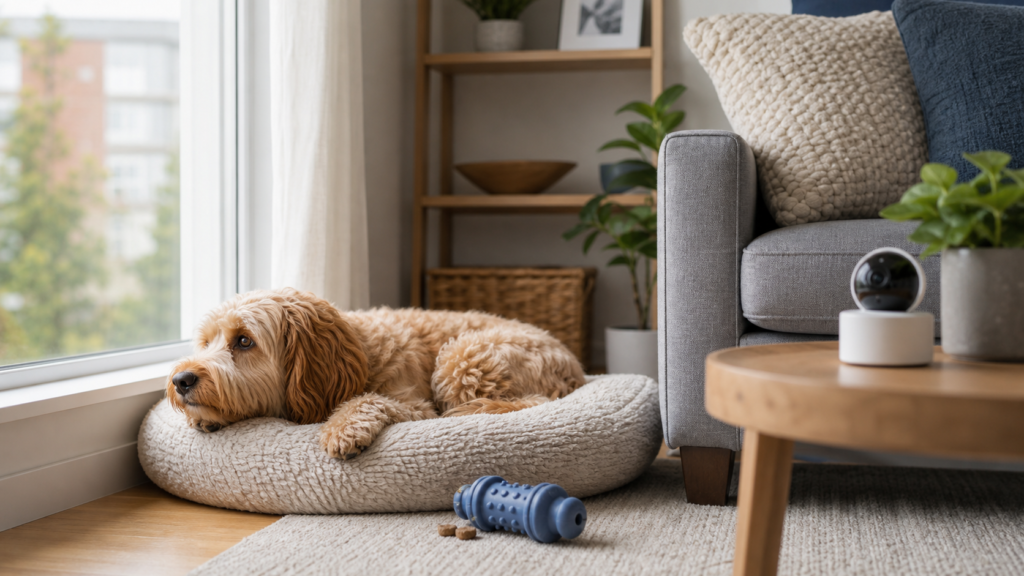
A treat dispenser camera is the best first choice if your dog can stay calm enough to take food. You can use it to reward quiet resting, calm crate time, or relaxed moments on a dog bed. The key is timing: reward calm behavior, not barking or jumping at the camera.
Best for: dogs that still respond to food when alone and owners who want a camera that can also support training.
Check before buying: treat size, jam rate, app reviews, camera angle, audio settings, and whether alerts are easy to control.
2. Simple home monitoring camera
Budget pick
A simple monitoring camera can be better than a treat camera if your dog gets overexcited by sounds, movement, or food rewards. It lets you watch behavior without adding another trigger. For many anxious dogs, this is the calmer way to start.
Best for: owners who mainly need to observe barking, pacing, sleeping, or destructive behavior.
Check before buying: video quality, night vision, privacy settings, app reliability, and whether recording history requires a subscription.
3. Two-way audio dog camera
Two-way audio sounds helpful, but it is not right for every anxious dog. Some dogs settle when they hear a familiar cue. Others become more stressed because they can hear you but cannot find you. Test it during very short absences before relying on it.
Best for: dogs that already respond calmly to your voice and simple cues.
Check before buying: audio delay, speaker quality, notification control, and whether the microphone can be turned off when needed.
How to use a camera without making anxiety worse
Use the camera as a quiet tool, not a constant way to interrupt your dog. Watch first. Learn when stress starts. Then make alone-time sessions easier and shorter if needed. If you use treats, reward calm moments before your dog gets worked up.
- Place the camera where your dog normally rests or waits.
- Do not call your dog through the speaker if it makes them search for you.
- Use treat rewards only when your dog is calm enough to notice and eat.
- Pair the camera with simple enrichment, like a safe puzzle toy or lick mat.
- If your dog panics, focus on training support instead of more gadgets.
My buying advice
If your dog is mildly anxious but still eats when alone, start with a treat dispenser camera. If your dog panics or ignores food, start with a simple monitoring camera and use it to understand behavior patterns. For more product options, compare the full dog cameras with treat dispenser guide.
Frequently Asked Questions
What is the best dog camera for separation anxiety?
The best option is usually a reliable camera with clear video, good app reviews, alert control, and optional treat rewards. Choose a treat camera only if your dog stays calm enough to respond to food.
Can a dog camera make separation anxiety worse?
It can if you use audio or treats in a way that makes your dog more excited. Some dogs become stressed when they hear your voice but cannot find you, so test features carefully.
Should I get a treat camera or normal camera?
Choose a treat camera if your dog can stay calm and eat when alone. Choose a normal monitoring camera if your dog panics, ignores food, or gets too focused on the device.
Where should I place the camera?
Place it where your dog naturally spends time when alone, such as a bed, crate area, or room entrance. Keep cords hidden and make sure your dog cannot knock the camera down.