
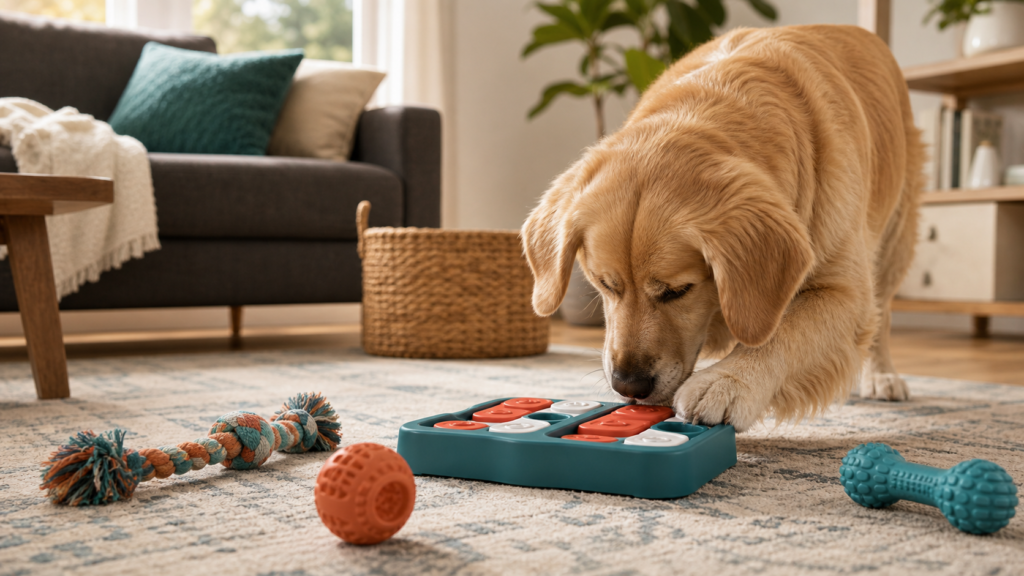
Puzzle toys are a great way to keep your dog mentally stimulated, but many dog owners don’t use them the right way. Simply giving your dog a puzzle toy isn’t always enough to keep them engaged. The way you introduce and use these toys can make a big difference in how effective they are. In this guide, we’ll show you how to use puzzle toys for dogs so they stay interested, challenged, and mentally active.
Disclosure: DogGizmo may earn a commission when you buy through links on this page. This does not affect which products we recommend.
Part of the Best Dog Toys hub. Related next: are puzzle toys good for dogs and puzzle toys for small dogs.
How to get better results with using puzzle toys
Puzzle toys work best when introduced like training, not like a test. Start simple, help your dog succeed, then raise the challenge gradually.
Owners who bought puzzle toys but want better results
Your dog's confidence, treat size, reset time, and session length
Leaving a confused dog alone with a difficult puzzle
DogGizmo tip: Use part of your dog's meal so puzzle time is rewarding without overfeeding.
Why Using Puzzle Toys Correctly Matters
Puzzle toys are designed to challenge your dog’s brain, but if they are too easy, your dog may lose interest quickly. On the other hand, if they are too difficult, your dog can become frustrated and give up. Using puzzle toys correctly ensures your dog stays engaged while still enjoying the challenge. Finding the right balance is key to getting the most out of these toys.
How to Use Puzzle Toys for Dogs
1. Start Simple
If your dog has never used a puzzle toy before, it’s important to start with something simple. Easy puzzle toys help your dog understand how the game works and build confidence. If you start with something too difficult, your dog may become confused or lose interest quickly. Once they understand the concept, you can slowly increase the difficulty.
2. Use High-Value Treats
Using treats your dog really loves will encourage them to interact with the puzzle toy and stay focused longer. The more rewarding the experience, the more likely your dog is to keep trying. High-value treats also make the toy feel more exciting and help build a positive association with the activity.
3. Supervise at First
When introducing a new puzzle toy, it’s a good idea to supervise your dog during the first few sessions. This allows you to guide them if they get stuck and make sure they are using the toy safely. It also helps you see how your dog interacts with the toy and whether the difficulty level is appropriate.
4. Increase Difficulty Gradually
As your dog becomes more comfortable with puzzle toys, you can introduce more challenging options. Increasing the difficulty over time keeps your dog engaged and prevents boredom. This also helps improve problem-solving skills and keeps the activity mentally stimulating.
5. Use Them Regularly
Consistency is key when it comes to puzzle toys. Using them regularly helps create a routine and gives your dog something to look forward to. Even short sessions throughout the day can make a big difference in your dog’s mental stimulation and overall behavior.
Choosing the Right Puzzle Toy
Choosing the right puzzle toy depends on your dog’s size, experience level, and chewing behavior. Some dogs need simpler toys, while others benefit from more advanced challenges. Durable materials are important, especially for dogs that like to chew. The right puzzle toy should be challenging enough to keep your dog engaged, but not so difficult that it causes frustration.
Final Thoughts
Using puzzle toys the right way can greatly improve your dog’s mental stimulation and reduce boredom. When introduced properly, these toys can become a fun and rewarding part of your dog’s daily routine. By starting simple, increasing difficulty gradually, and staying consistent, you can keep your dog engaged, happy, and mentally active.
Read our guide on whether puzzle toys are good for dogs to learn more. You can also check out our guide to the best dog toys for mental stimulation.
Frequently Asked Questions
What should I try first for
Start with the simplest change: adjust your dog's routine, remove the most obvious trigger, and reward calm behavior. If the problem continues, add training steps gradually.
Can toys or gadgets help with this behavior?
They can help when the behavior is linked to boredom, stress, or too much unused energy. They work best alongside training, exercise, sleep, and a predictable daily routine.
When should I ask a vet or trainer?
If the behavior is sudden, intense, linked to pain, or getting worse, contact a vet or qualified trainer. Medical issues and anxiety can look like normal behavior problems.