
If your dog keeps chewing your furniture, you’re not alone. Many dog owners struggle with this frustrating behavior, especially when it leads to damaged couches, tables, or chairs.
The good news is that chewing is a natural behavior that can be redirected. In this guide, you’ll learn exactly how to stop your dog from chewing furniture using simple and proven methods.
Dogs chew furniture because of boredom, teething, anxiety, or lack of proper outlets. The best way to stop it is by providing alternatives, increasing stimulation, and consistently redirecting the behavior.
Part of the indoor enrichment and behavior hub. Related next: why dogs chew everything and toys for aggressive chewers.
How to get better results with stopping furniture chewing
Furniture chewing needs management, redirection, enrichment, and consistency. Protecting furniture matters, but teaching the right chew outlet matters more.
Owners dealing with repeat chewing on chairs, sofas, or table legs
Triggers, access, boredom, teething, anxiety, and available chew options
Letting your dog rehearse the behavior when unsupervised
DogGizmo tip: Block access, add better chew outlets, and reward your dog for choosing them.
Why dogs chew furniture
Before you can fix the problem, it’s important to understand why it happens. Dogs don’t chew furniture to be “bad” — they do it because they have a need that isn’t being met.
In most cases, chewing is linked to excess energy, curiosity, or stress.
1. Boredom
Dogs that don’t get enough exercise or mental stimulation will look for ways to entertain themselves. Furniture is easy to access and often becomes their target.
2. Teething (puppies)
Puppies chew to relieve discomfort when their teeth are growing. This is completely normal, but it needs to be redirected to appropriate items.
3. Anxiety or stress
Dogs with separation anxiety or stress may chew furniture as a coping mechanism, especially when left alone.
4. Lack of training
If your dog has never been taught what they can and cannot chew, they will simply choose whatever is available.
How to stop a dog from chewing furniture
Stopping this behavior requires consistency and giving your dog better alternatives. Punishment alone does not work — you need to replace the behavior.
1. Provide proper chew toys
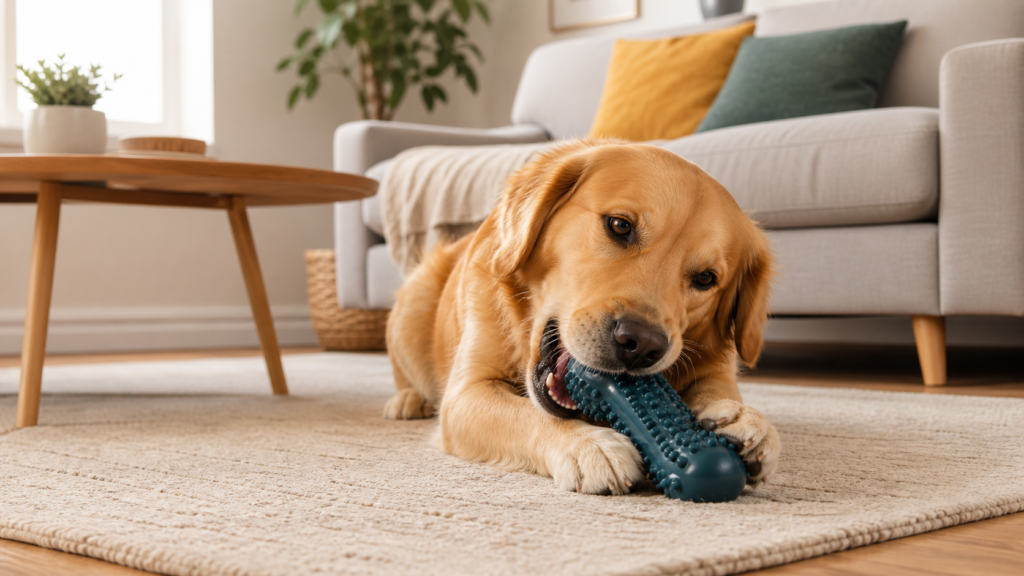
Dogs need something to chew. If you don’t give them the right items, they will choose your furniture instead.
Make sure your dog always has access to safe and durable chew toys.
2. Increase exercise
A tired dog is far less likely to chew destructively. Daily walks, playtime, and mental challenges reduce unwanted behavior significantly.
3. Redirect immediately
If you catch your dog chewing furniture, calmly redirect them to a toy. Consistency is key — every time matters.
4. Limit access
Prevent access to areas where your dog tends to chew. Use gates or keep them supervised until the behavior improves.
5. Create a routine
Dogs thrive on structure. A consistent routine reduces stress and helps prevent destructive habits.
One of the most effective ways to stop furniture chewing is by giving your dog better alternatives.
Durable chew toys and interactive toys can keep your dog busy and reduce destructive behavior.
You can check out some of the best options here:
Related behavior problems
Dogs that chew furniture may also show behaviors like digging, licking, or signs of boredom.
If you want to understand these behaviors better, check out these guides:
Final thoughts
Chewing furniture is a common problem, but it can be fixed with the right approach. By giving your dog proper outlets and staying consistent, you can stop the behavior and protect your home.
Frequently Asked Questions
How do I stop my dog from chewing furniture when I’m not home?
Provide toys, limit access, and make sure your dog is mentally stimulated before you leave.
Why does my dog chew furniture even after exercise?
This can be due to habit, anxiety, or lack of mental stimulation.
Will my dog grow out of chewing?
Some dogs improve with age, but training and redirection are still necessary.