
The best dog toys for mental stimulation make your dog sniff, lick, solve, roll, search, or work for food in a calm way. They are useful for bored dogs, smart dogs, rainy days, home-alone routines, and dogs that need more than a normal walk. The key is choosing the right difficulty level so your dog stays interested instead of frustrated.
Disclosure: DogGizmo may earn a commission when you buy through links on this page. This does not affect which products we recommend.
Part of the Best Dog Toys hub. Related next: are puzzle toys good for dogs, how to use puzzle toys, and best dog toys for bored dogs.
Quick mental stimulation toy picks
Start here if you want the simple version. Match the toy to your dog’s patience, food motivation and chewing style.
| Pick | Best for | Check first |
|---|---|---|
| Puzzle toy Best choice | Dogs that enjoy problem-solving and food rewards | Difficulty level, removable parts, cleaning |
| Treat dispensing toy Budget pick | Short enrichment sessions and boredom prevention | Treat size, noise, chew resistance |
| Snuffle mat | Sniffing, foraging and calmer indoor enrichment | Washability, fabric strength, supervision |
| Interactive toy | Dogs that need movement or novelty | Battery use, sound level, durability |
| Lick mat | Calm licking, grooming help and quiet settling | Texture, freezer-safe material, cleaning |
How to use enrichment toys without frustrating your dog
Mental stimulation toys work best when your dog can win. Start easy, help them learn the game, then make it harder slowly. A toy that is too difficult can cause barking, chewing, giving up, or flipping the toy over instead of solving it.
Use visible treats first, then hide them more once your dog understands the game.
Five to ten minutes can be enough for a good mental workout.
Use two or three options across the week so the toys stay interesting.
Best dog toys for mental stimulation in 2026
These are the main enrichment toy styles worth comparing. Each one stimulates your dog in a different way, so the best choice depends on whether your dog likes sniffing, licking, chewing, chasing, or solving puzzles.
1. Puzzle toy
Best choice
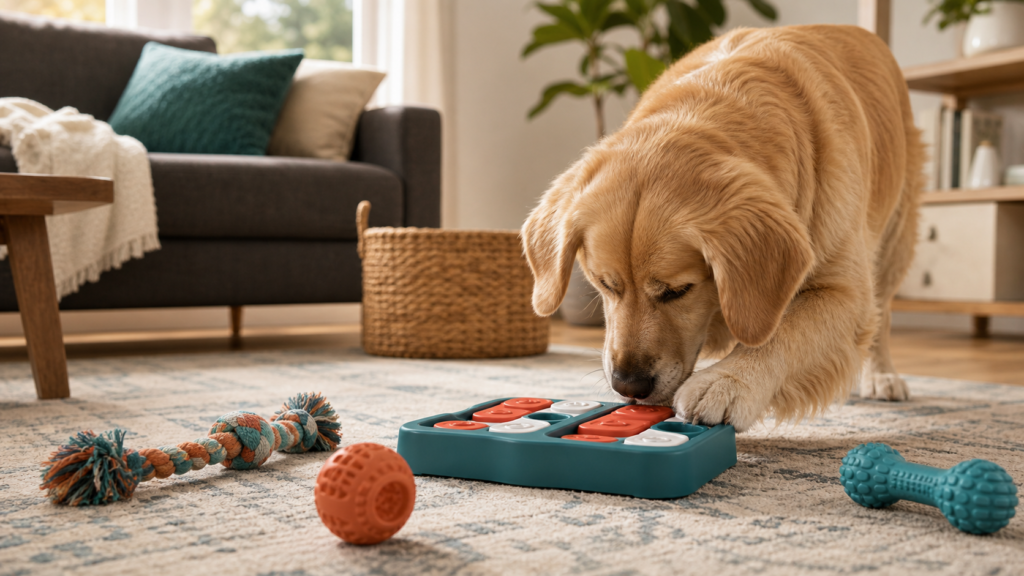
A puzzle toy is the best first choice for many dogs because it turns food into a simple problem to solve. Your dog may need to slide, lift, nudge, spin, or paw at parts of the toy to find treats. This makes meals or snack time more engaging than eating from a bowl.
Best for: food-motivated dogs, smart dogs and dogs that need a structured indoor activity. If this is new for your dog, read how to use puzzle toys for dogs before making it harder.
2. Treat dispensing toy
Budget pick
A treat dispensing toy is simple, affordable and useful for short enrichment sessions. Your dog has to roll, paw, nose or move the toy to release treats. This can help slow down snack time and give your dog a small job to focus on.
Best for: dogs that get bored quickly but do not need a complicated puzzle. Check treat size, noise on hard floors, and whether the toy is strong enough for your dog’s chewing style.
3. Snuffle mat
A snuffle mat gives your dog a scent-based activity. You hide small treats or kibble in the fabric, then your dog uses their nose to search. This is often calmer than a moving toy and can be a good choice for indoor days or dogs that enjoy sniffing on walks.
Best for: sniffy dogs, fast eaters and dogs that need a calmer enrichment option. Choose one that is washable and use supervision if your dog likes to chew fabric.
4. Interactive dog toy
Interactive dog toys can move, make sound, wobble, roll or react to your dog. They can be helpful for dogs that lose interest in static toys. The tradeoff is that some dogs may get overexcited, so sound level and durability matter.
Best for: dogs that need movement and variety. If your dog is left alone often, pair this with ideas from best dog toys for dogs home alone.
5. Lick mat
A lick mat is a lower-energy enrichment toy. Spread soft food across the textured surface and let your dog lick slowly. It can be useful during quiet time, grooming, crate practice, or moments when you want your dog to settle instead of ramp up.
Best for: calm enrichment, puppies learning to settle, and dogs that prefer licking over solving. Choose freezer-safe material if you want sessions to last longer.
Which mental stimulation toy should you buy first?
If your dog is new to enrichment, start with a treat dispensing toy or beginner puzzle. If your dog loves sniffing, choose a snuffle mat. If your dog needs calm settling, choose a lick mat. If your dog destroys toys quickly, read best dog toys for aggressive chewers before choosing anything with soft parts.
For a broader boredom-focused guide, see best dog toys for bored dogs. For the main hub, go back to best dog toys.
Frequently Asked Questions
What are the best toys for mental stimulation in dogs?
Puzzle toys, treat dispensing toys, snuffle mats, lick mats and interactive toys are the main options. The best one depends on whether your dog likes solving, sniffing, licking, chewing or moving.
How long should a dog use a puzzle toy?
Start with five to ten minutes. Stop while your dog is still interested, especially in the beginning. Short successful sessions are better than one long frustrating session.
Can mental stimulation toys help a bored dog?
Yes, they can help by giving your dog a job to do. They work best when combined with exercise, training, sniff walks and a routine that gives your dog enough attention.